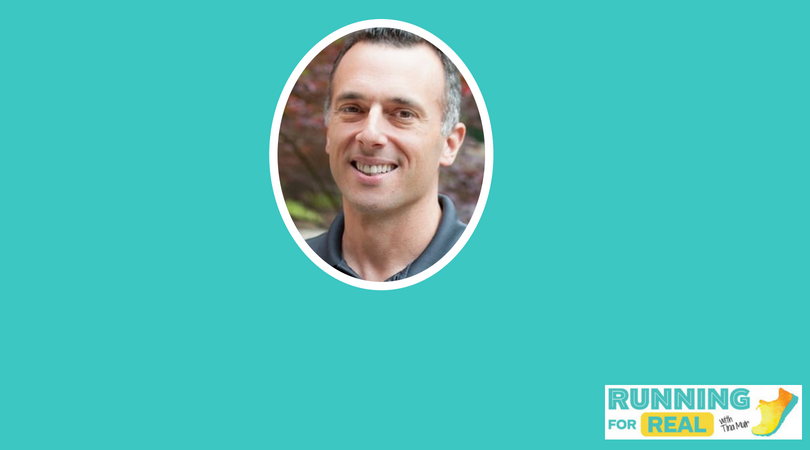
Sara Slattery thoroughly understands the demands of student athletics. She won national and international titles in cross country and indoor track while in high school, and had even greater success competing for the University of Colorado. Her professional career included winning a gold medal, with a record-setting time, in the 10,000 meters at the 2007 Pan American Games. She went on to become a college coach, giving her first-hand insights into the challenges faced by both athletes and their team leaders.
Listen to the Running for Real podcast here:
Apple (iTunes) Podcast | Sticher | Castbox | Overcast | Spotify | Google Play | iHeartradio |
Sara came to running from a swimming background, where being one of the taller, stronger girls was an advantage. When she switched to running, she discovered that while she had seen being smaller as a hindrance as a swimmer, as a runner, it was the opposite. She made the Foot Locker Nationals during her first season, and remembers, “I felt like a giant compared to the girls I was running against.”
She also found that she couldn’t eat the way she used to. At swim meets, she says, “We would be eating at the buffet, and then swim an hour later, and nothing would happen.” But at a track meet, she recalls, “My mom brought oranges and some other things and I ate them before my mile. And I remember puking so hard behind the bleachers after the race, and I was like, ‘Oh shoot, I can’t eat like I normally do before running events.’”
Sara had gone through puberty at age 12, but she lost her period at the end of her junior year of high school. Her mother took her to a doctor who ran tests and said that she was fine. Then she went to a USATF Junior National camp, and they suggested that she go on birth control to get her period back. “So then I started on birth control and I had conflicting feelings inside, because I was not having sex, but I was going on contraception, and talking to my parents about doing this, and so it felt weird. And I didn’t really understand what I was doing, but I was like, ‘Well, this will help keep my cycle going and I can train and I’ll be okay.’”
It wasn’t until she went to college that her amenorrhea was really addressed. The team dietician told her, “It could be as little as 200 calories you’re missing, or not getting enough fat or different things. So why don’t we try to correct that with your diet and get you off hormones, because it’s not great to be on synthetic hormones for a long time.” It took 6-8 months, but fueling correctly did bring her cycle back.
She credits her coach, Mark Wetmore, with helping her to be the best athlete that she could be, while also being healthy. He cared about her overall well-being, and that, she thinks, is “the key thing, caring about your athletes as a person as much as an athlete.” It was a lesson that she took with her when she became a coach herself.
As a coach, she says, “I made it a regular part of our conversation, just like your sleep or training. ‘Did you have your menstrual cycle this month? How are you feeling? How are things going?’ I think the more we talk about it and make it not taboo with athletes and coaches and parents, the better it is. Just arming people with more information and not making it uncomfortable for athletes.”
Education about all the aspects of RED-S (Relative Energy Deficiency in Sport) is vital, she believes. “Women are very lucky because we have this biomarker that yells at us when we aren’t doing things correctly. But I had a lot of men that came forward when I was coaching that talked about issues that they were struggling with, with eating and not feeling right, and pressures with feeling like they needed to be a certain weight to perform well. We need to provide for both the men and the women on this issue. If we talk about menstruation, don’t make it uncomfortable for the girls, but don’t make it uncomfortable for the guys either, that they struggle with these same issues, because I think it emasculate them sometimes, when they think they’re struggling with this and it’s only girls that struggle with this.”
Sara loved the relationship she had with her athletes. Going to college, she observes, is “a really pivotal time in your life where you’re growing up and figuring out who you are. Being on your own for the first time and being a part of this new team and learning to be an adult. It can be hard, and so your team becomes your family.” But with two children of her own, she eventually felt that she wasn’t able to give either them or her team the amount of time and support that they needed, and she stepped away from coaching.
She still conducts a running camp every summer, and she’s co-authored a book with Molly Huddle, How She Did It: Stories, Advice, and Secrets to Success from Fifty Legendary Distance Runners. They wrote it, she says, “because it was a book we would have loved to have when we were a high school athlete and we wanted to arm girls with resources.” The first half is “kind of like a recipe book of the things that you need to be a successful athlete long term.” The second half tells the stories of fifty women who have had long running careers. “It’s like, how do you navigate those things and do it in a healthy way and continue to love the sport and improve throughout your career and do it at the highest level.”
Sara says that she loved coaching, but that she’s really enjoying being able to be more involved in her own kids’ lives now. “I always felt like I was a mom to like, 40 student athletes, and I cared about them, just like I care about my kids. I feel like now, I’m still coaching, but I just have two that I’m trying to navigate and give them the best situation for moving forward. I do miss it, but I’m really happy being where I am right now. “
If you suffer from RED-S, or think that you may, we’ve created a free resource of over 50 videos that will be available on YouTube on February 6th. Experts in sports nutrition and performance answer questions submitted by real people, covering everything you may have wondered about Relative Energy Deficiency in Sport.
resources:
Running for Real YouTube channel – RED-S videos coming on February 6th